

MLambda Science
A scientific and CAD workbench: parts, assemblies and simulation, quantum circuits, chemistry, boards and circuits, every number from Hilbert.
Being rewritten in native Aleph, field by field


MLambda Science
MLambda Science is a workbench for science and engineering. Its fields (CAD, quantum, chemistry, algebra, graphs, circuit boards and processors) share one window. Every law and number in it comes from Hilbert, computed on Tensor, every screen is Aphrodite, and every test is Dream. Science draws. Hilbert computes.
CAD: parts, assemblies, simulation
Sketch on a plane or on a face, extrude a part, constrain an assembly, and run it. A simulation sweeps the joints, records events (where a load is highest, where the tip is fastest, how near the hand comes to the bench), and plots every watched value over time. (The CAD pictures are its design canvas; the native field is being written from it, and the quantum pictures further down are the native window.)
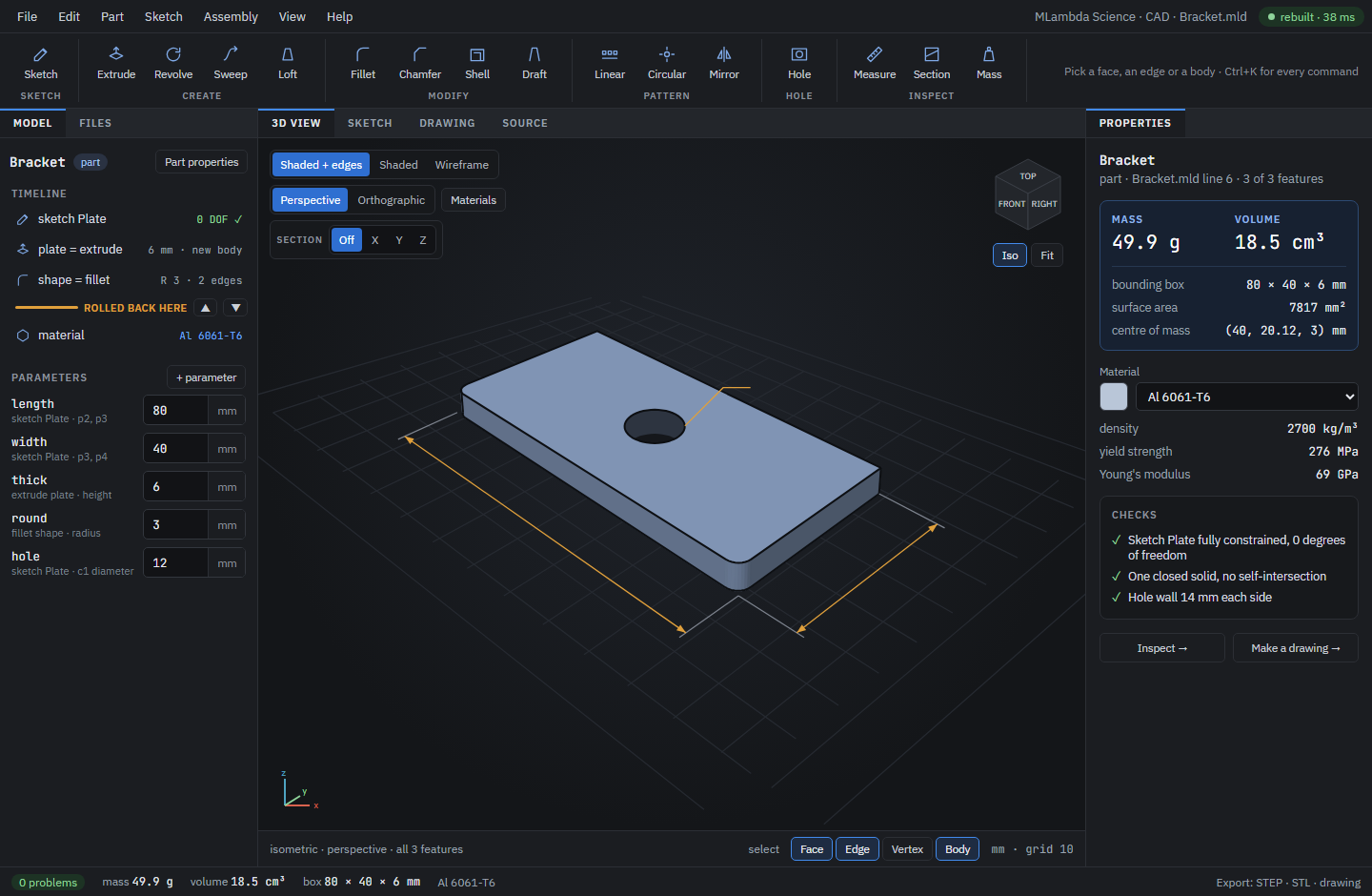
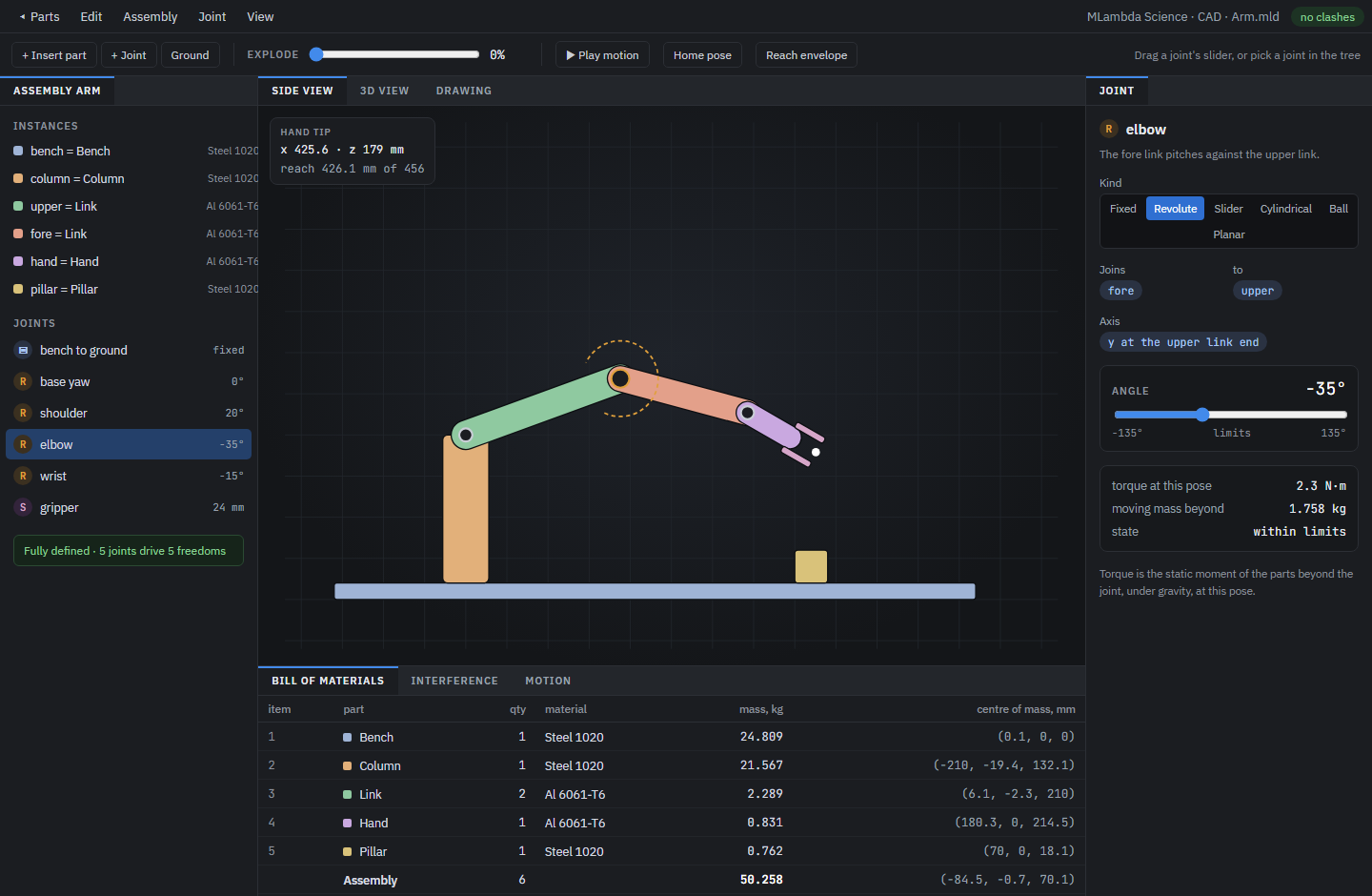
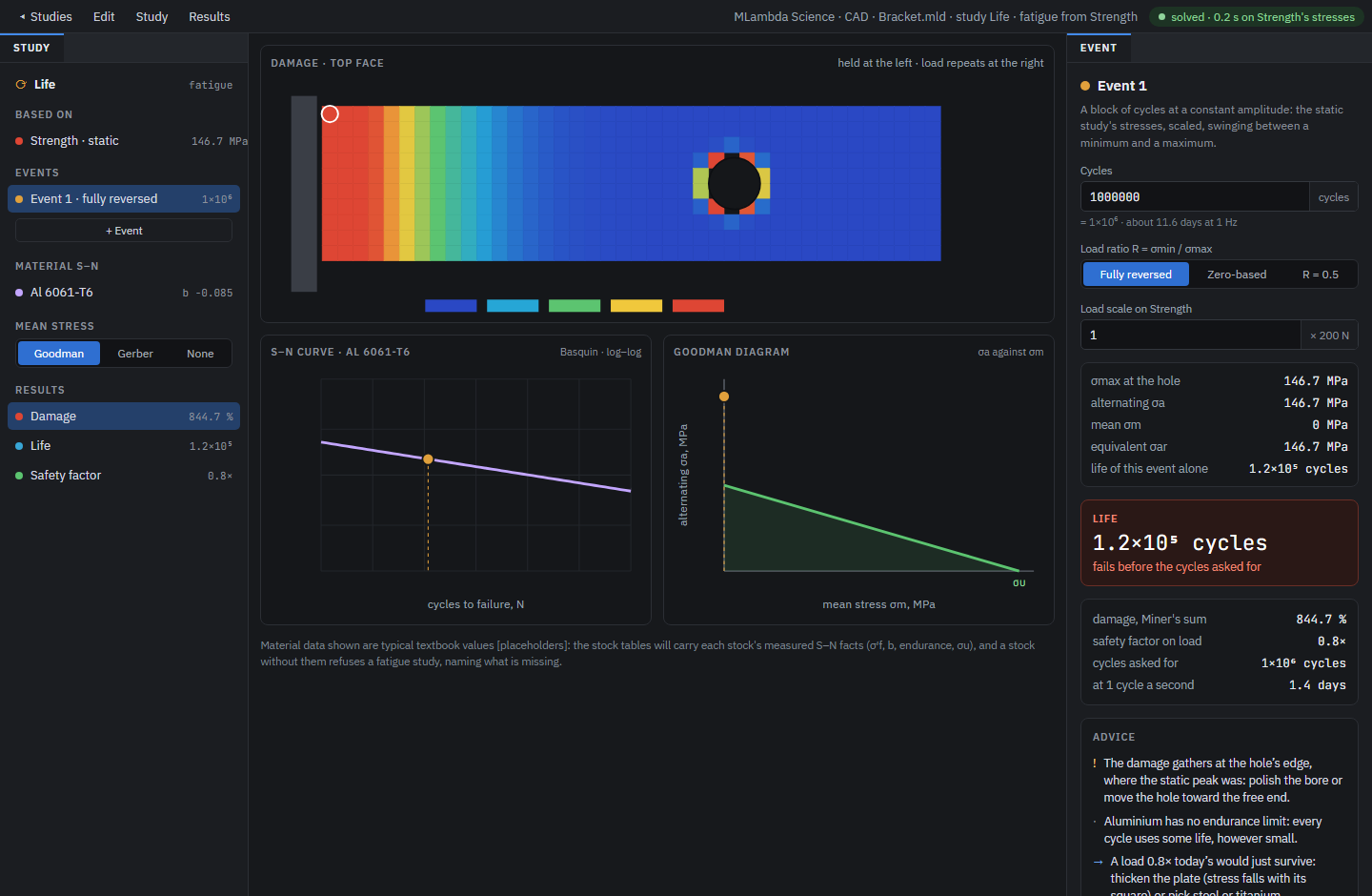
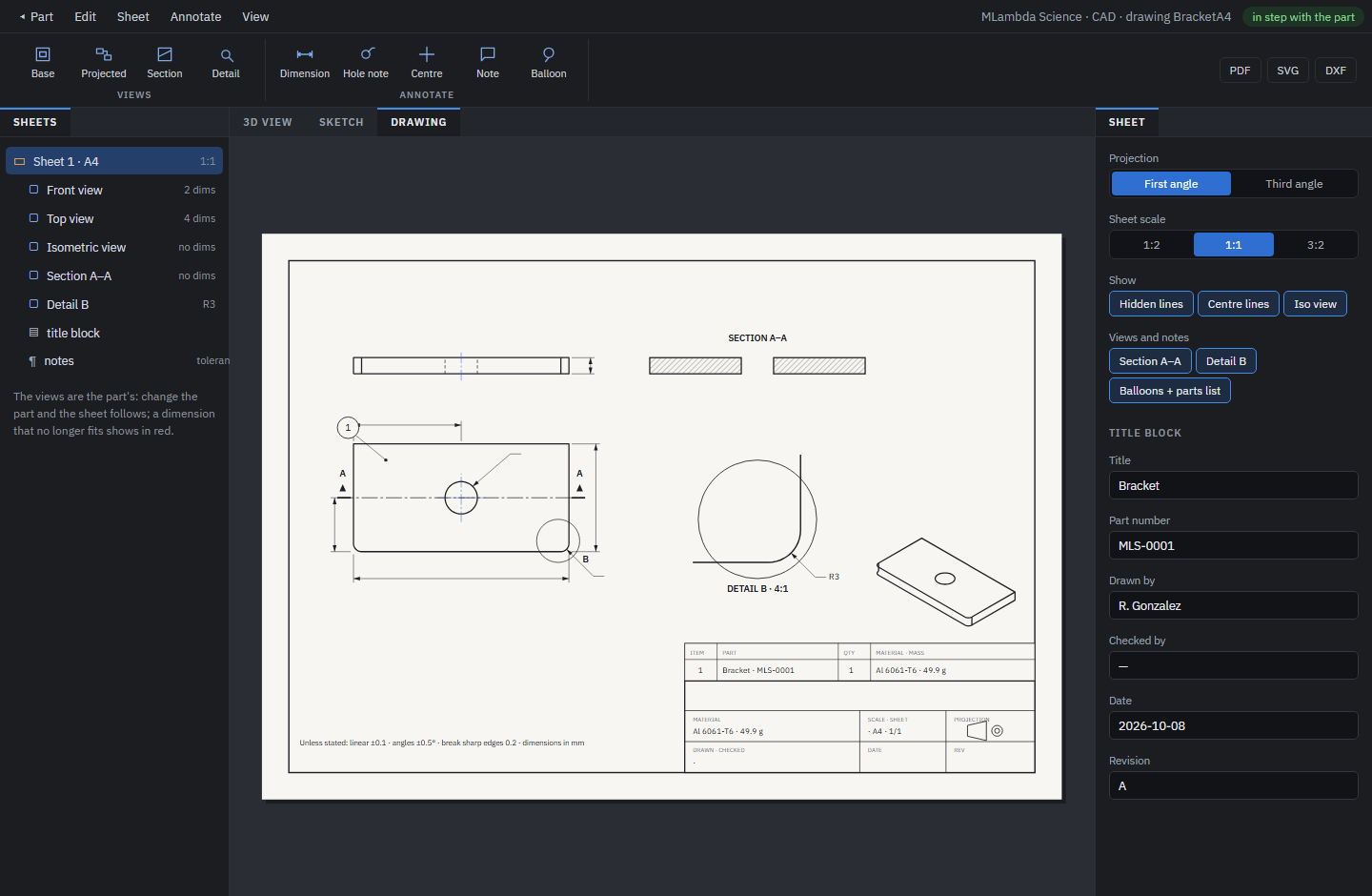
Analysis follows the model: fatigue, dimensions and drawings come from the same part.
Quantum
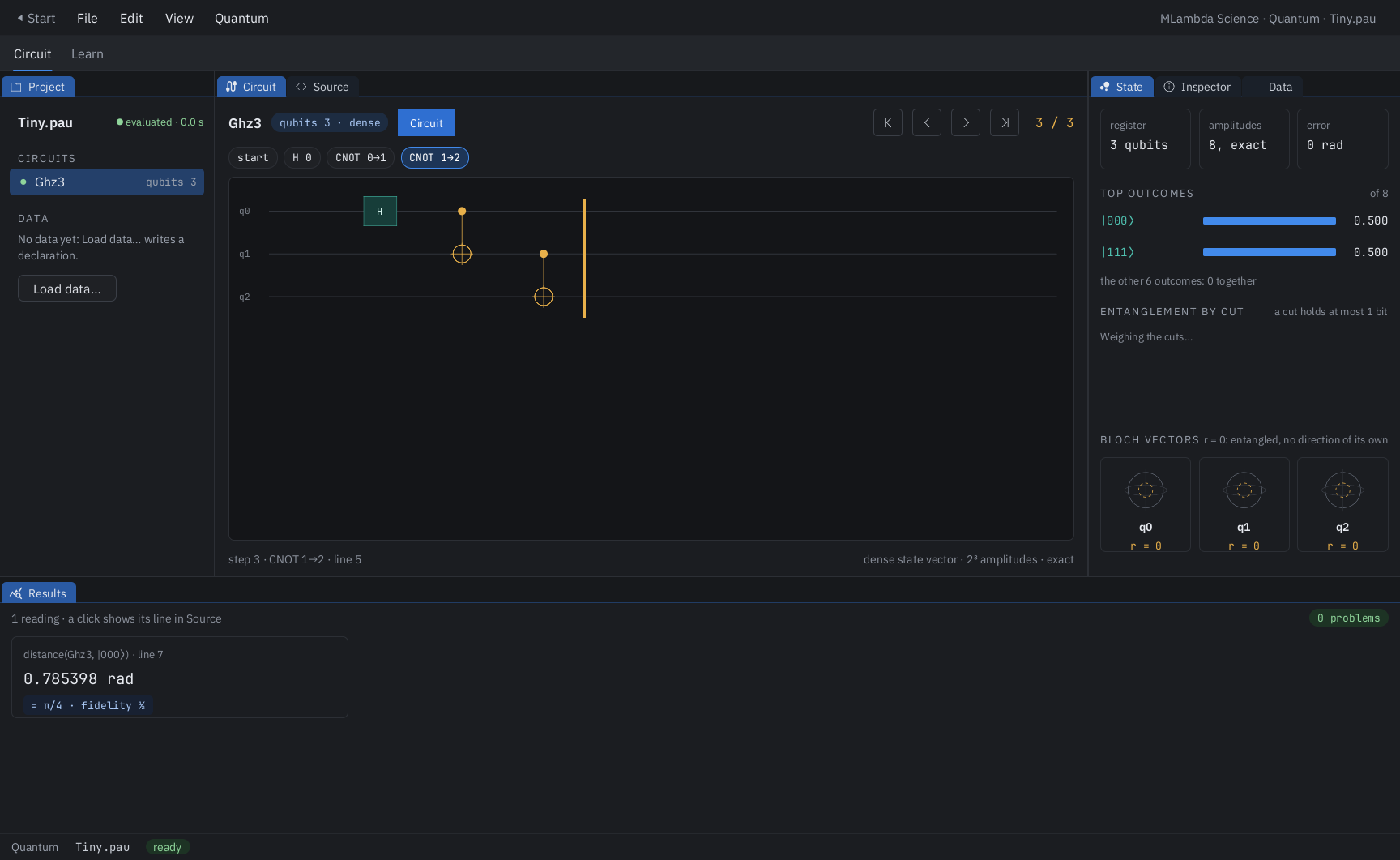
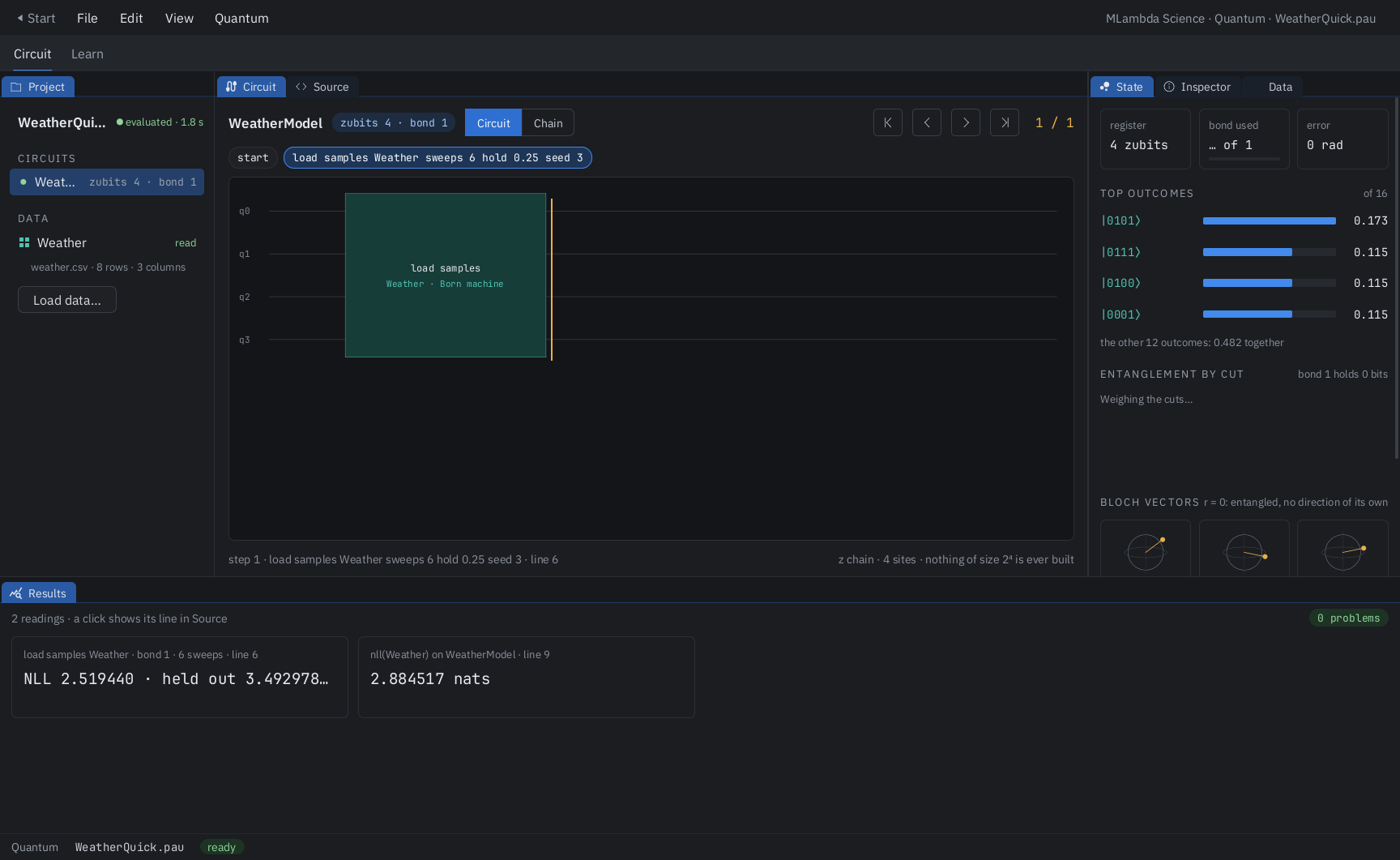
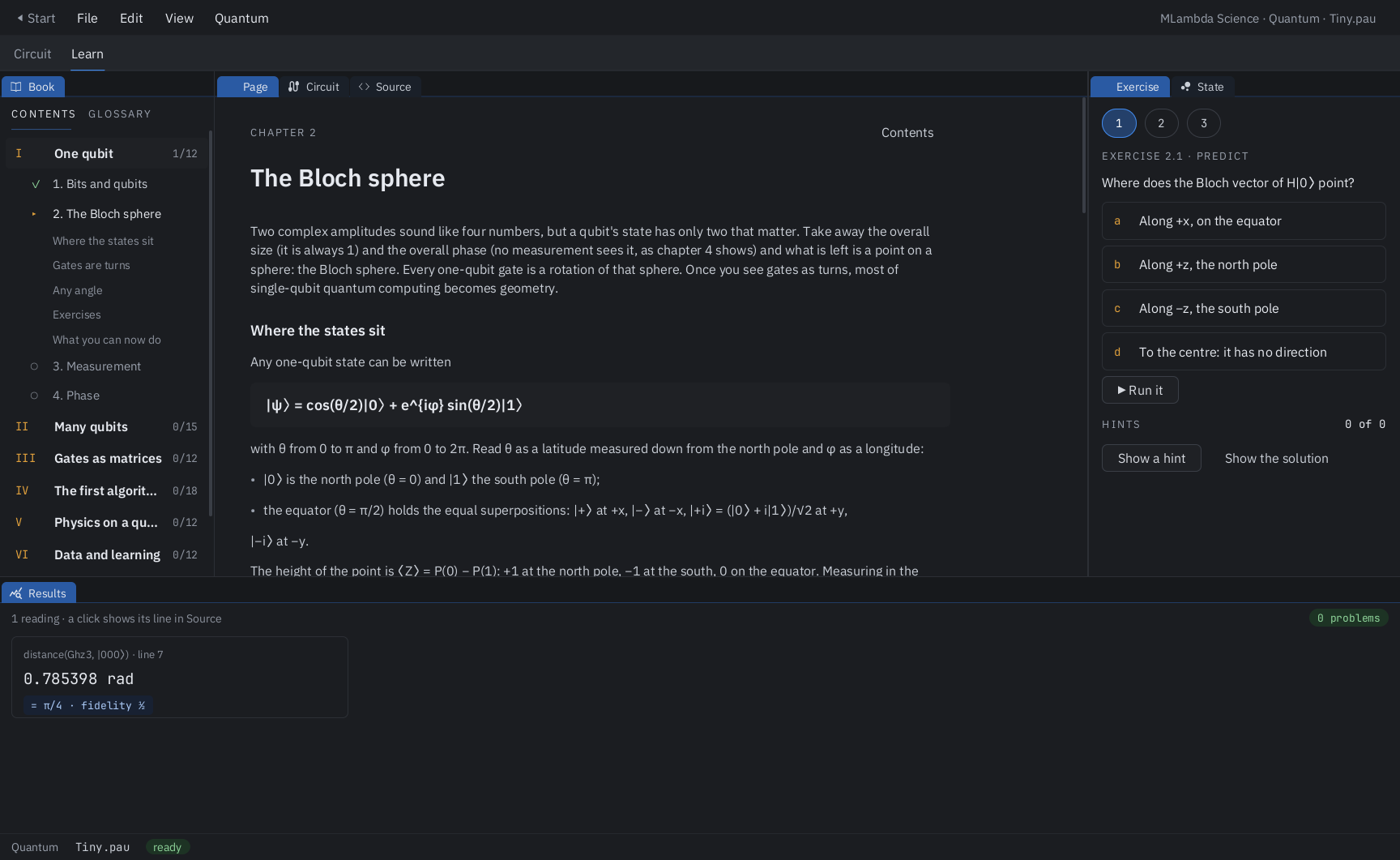
Write a circuit or a source file, step through it gate by gate, and watch the state: its amplitudes, its top outcomes, the entanglement across each cut and each qubit’s Bloch vector. Learning chapters teach as they compute. The state is exact, on Tensor: a GHZ chain that took two minutes runs in 55 ms since the planner.
The fields
| Field | What it holds |
|---|---|
| CAD | Parts, sketches, assemblies, kinematic and dynamic simulation, fatigue, drawings; solids as signed-distance fields rendered on the GPU |
| Quantum | Circuits, the state vector, entanglement, learning and training |
| Chemistry | Molecules placed by Hilbert’s conformer and relaxed by a force field (UFF), spectra and facts |
| Boards and PCB | Board dynamics and solvers, circuit laws |
| Tesla | Processors: an instruction set, its laws and discovery |
| Mold, Factory, Robotic | Machines and production |
| Algebra, Graph, Neuron | Computer algebra, graphs, and the models Lab |
Each field is an instance of one set of traits (SciField, SciOpening, SciCommanding, SciDrawing), and the
workbench holds the installed fields as a chain. Adding a field adds a type, never a case.