

Design: prototype, Playground, side by side
Every screen starts as a clickable prototype, and every window is proved against it side by side, state by state, with a slider.
In use on every app


Design: prototype first, then side by side
In MLambda a screen is designed before it is built, and the built window is measured against the design, not eyeballed.
1. Research, then the prototype
Each product starts with research into how the market’s tools work and what a person actually does. Then it gets a prototype: an HTML canvas that runs from disk, with realistic data, every state a screen can be in (empty, loading, a fault, a long list, a narrow window) and every action a person takes. The canvas is where decisions are made and changed cheaply: the layout, the words, the flow and the look.
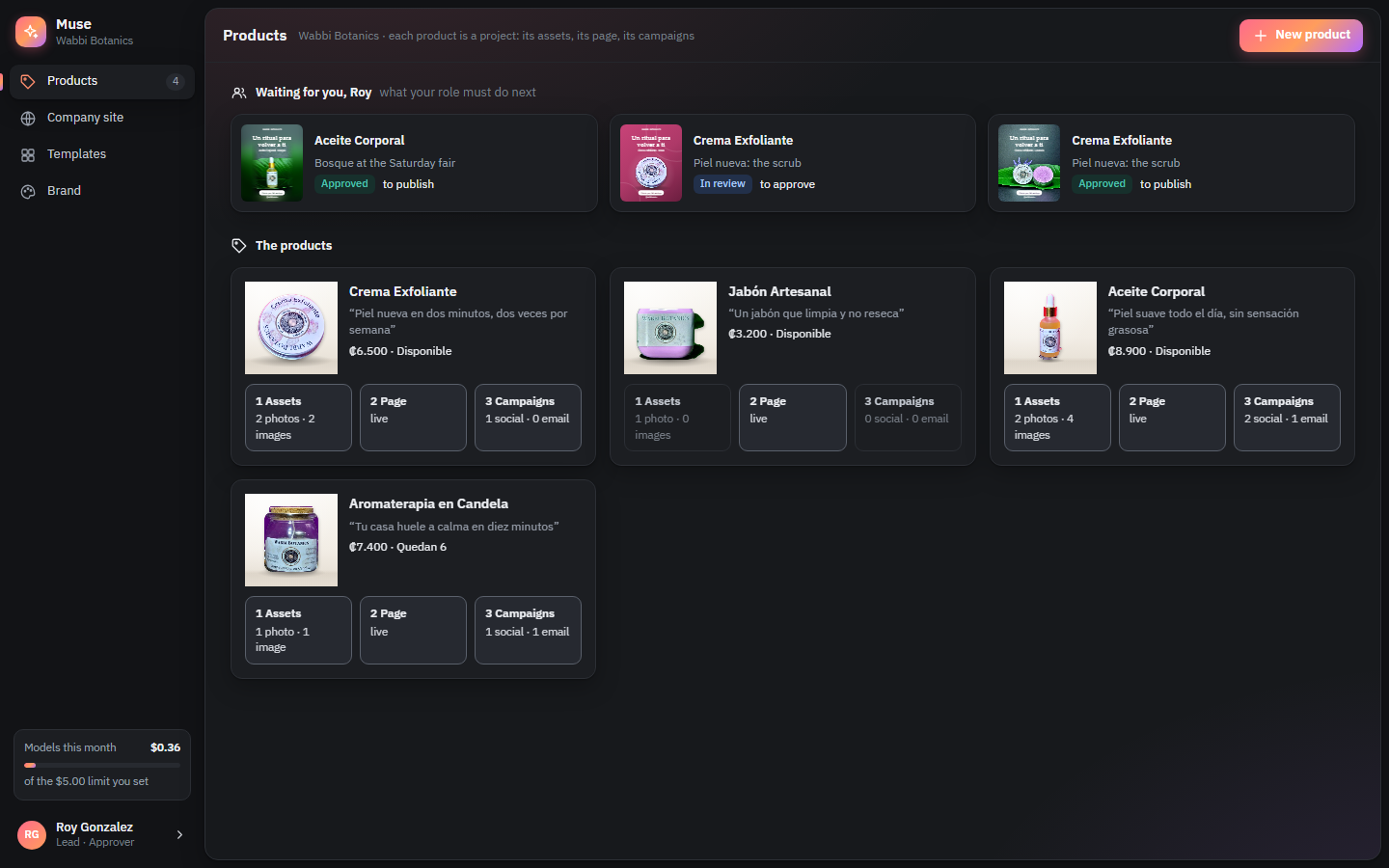
The look is shared across the family: a dark canvas (with a light theme), IBM Plex Sans for words and JetBrains Mono for figures, outlined icons with labels, soft gradients and glow, blurred modals, settings under the person’s menu.
2. The window, in Aphrodite
The window is written in Aphrodite: theme tokens, styles, components and screens, each view reading a store. Before the back end exists, the window runs on mock stores built from the prototype’s own data, so it can be compared state by state.
3. Playground: side by side
MLambda.Playground turns that comparison into a tool. It reads the prototype, extracts its design and its data, infers its states and actions by observing it (it clicks, and watches what changes), drives the window into each of the same states, and lays every state of the window beside the prototype’s. A Max society decides when each stage runs.
Its report is a gallery with five modes for every state:
- Canvas: the prototype alone.
- Window: the built window alone.
- Side by side: both halves next to each other.
- Difference: the two laid on each other, so that only what differs lights up.
- Slider: the prototype and the window on top of each other, with a divider to drag across.
Each state gets a score, the mean colour difference of the two pictures computed on Hilbert.Tensor: 2 or less is green. A window is not done until its states are within the bound, and a blank text or a missing icon in a shot is a fault, whatever its score.
4. Then the stories
When the window matches, Dream journeys drive it as a person would, through the testing build’s automation door, while the back end’s scenes run against the deployment.